
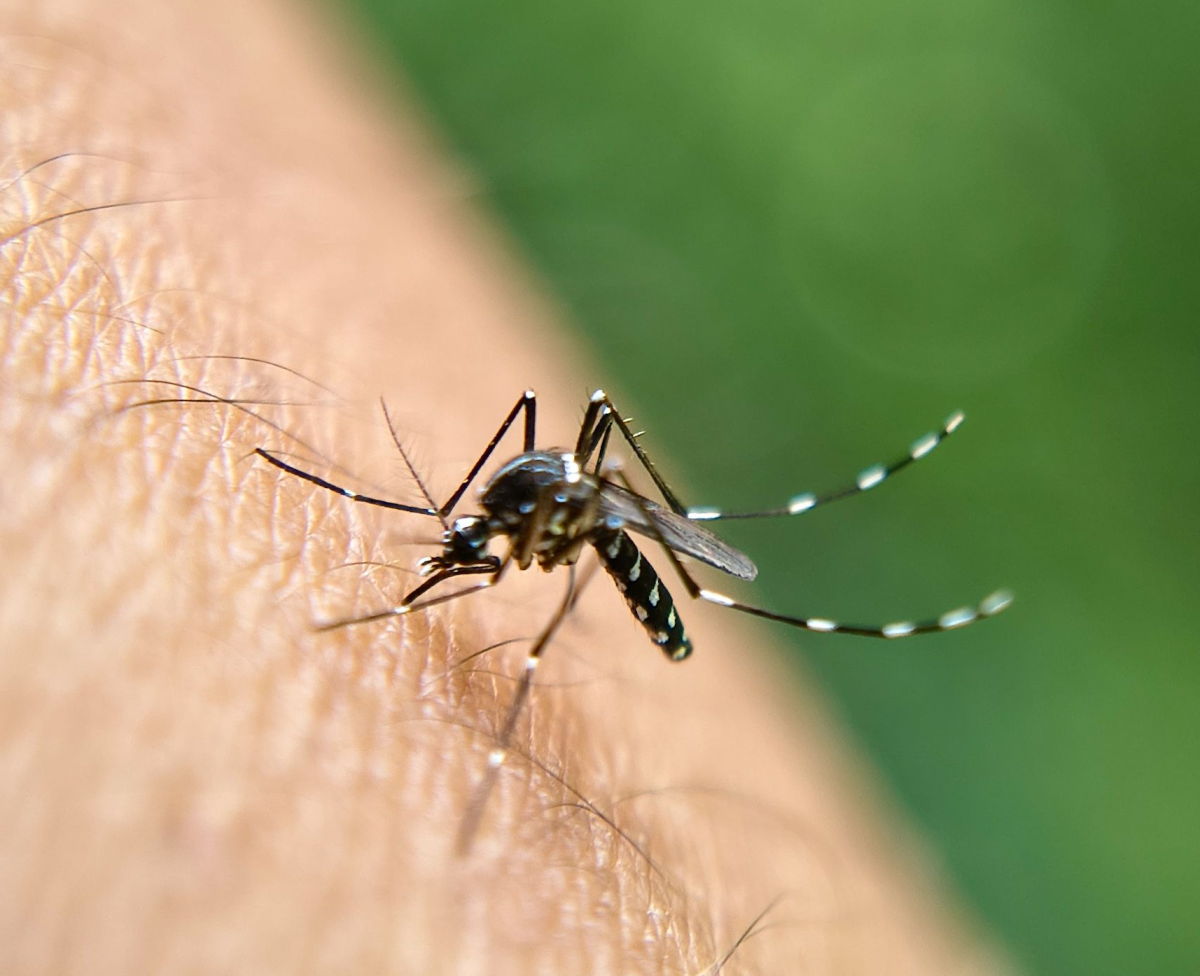
Tiger Mosquito: How to Identify It, Prevent Bites and Treatment
The tiger mosquito (Aedes albopictus) has become one of the most bothersome and widespread invasive species in urban areas. Its presence not only causes discomfort from its aggressive bites, but also represents a public health issue worth knowing about so you can act in time.
What is the tiger mosquito and how do you recognize it?
Originally from Southeast Asia, the tiger mosquito stands out for its aggressive behavior. Unlike the common local mosquito, which usually bites at night, the tiger mosquito bites mainly during the day, especially early in the morning and at dusk.
To accurately tell it apart from the common mosquito, pay attention to these key physical features:
Small size: It is small, generally measuring between 5 and 10 millimeters.
Color pattern: Dark (black) body crossed by a very distinctive pattern of white stripes on the legs, thorax and abdomen.
Dorsal line: It has a striking longitudinal white line running down the center of the head and thorax.
Why is it dangerous? Risks and bites
A tiger mosquito bite tends to cause a noticeably more intense, red and painful inflammatory reaction than a bite from the common mosquito, along with persistent itching that can last several days.
Disease transmission: Although the vast majority of bites in our area only cause local discomfort, the tiger mosquito has the potential ability to act as a vector for viruses such as dengue, chikungunya and Zika if it has previously bitten an infected person.
How to prevent tiger mosquitoes at home
The most effective way to curb its reproduction is to avoid standing water, since females only need small amounts of clean water to lay their eggs.
Empty containers frequently: Check plant pots, saucers under plants, buckets, ashtrays or toys that may collect water after watering or rain.
Change standing water regularly: Change the water in pet bowls and vases every day.
Protect entry points and outdoor areas: Install screens on doors and windows, and keep pools or ponds well chlorinated and maintained.
Use authorized repellents: In areas with a high presence of mosquitoes, apply skin repellents containing active ingredients such as DEET or Icaridin to exposed skin.